Affichage des articles dont le libellé est English. Afficher tous les articles

lundi 7 novembre 2016

Interview with Eli « Paperboy » Reed


After a few setbacks in the ruthless business of music, Eli « Paperboy » Reed is back with a new record titled, « My way home », which lies closer to his musical roots. Eli told us about his path so far to his « home ».  Eli told us about the long path he had to take to get back to his « home ».

RG: The first thing I'd like to say is: « It's good to have you back »!
Do you like being on the road?
Eli Reed: Thanks (smile). Sometimes, it's (being on the road) not the easiest thing to do. But when you have a great show and so on, it's fun.

RG: After having been dropped by one of the major record labels, did you ever consider giving up music and getting a regular job - 9 to 5, 5 days a week?
Eli: It was more of a mutual departure but that's ok. It's a hard question. I don't know who hasn't considered that sometime in their career. Music is hard, man. Making music for a living is really hard. I like to be doing something every day. And when you're not touring or making or promoting a new record, sometimes you're just doing nothing. And that's not fun. And also you have setbacks and you're at the whims of fans and things that you can't control. It's not an easy way to make a living. Sometimes you wish you had a steady paycheck for sure.

RG: Why are you standing in a boxing ring on the album cover?
Eli: The exact same reason. It's a fight, man. It's always a fight. And especially when you're trying to get to where you want to be. When you're trying to achieve something musically. There are a lot of factors. It's always a battle. And I don't mean to be dramatic or anything. I also just like the idea of being in a boxing ring on the cover of my record. I think that's awesome.

RG: It's pretty cool indeed…
Eli: Yeah, we did it in that old boxing gym in Brooklyn. Everything about doing this is a fight, a battle. Always.


RG: The new album is called « My way home », how would you describe your “home” from a musical standpoint?
Eli: There is more than one way for different artists to be successful and make a living even if there aren’t that many people every night. But it's still hard. It's hard to find a home, I don't know I wish I had an answer for that. 

RG: Your lyrics are so serious sometimes, I'm thinking about a song like « What have we done »...
Eli: I don't like to be making political music but I think that people should take responsibility for the way we're treating our planet. I wanted to write a hymn. It's a hymn for today, I think we should all get behind. I don't have the answers to all the questions that I pose in the song. That's the point of it - that we don't know.

RG: Listening to the new album I thought you were coming to terms with your music. No offense, but I didn't really like the previous record… I didn't really recognize you on the record « Nights like these »…
Eli: Sure, no problem. It's a shame but I understand. I made the record myself, I wrote all the songs. There was a lot of me in there. I wanted to make a record that was different and push the boundaries and that wasn't the same old record. I'm happy I did it, no matter what happened. I wish I’d got more of an opportunity to promote it because I would have. Honestly, it's not necessarily what comes naturally to me but it doesn't mean it was a bad idea. Sometimes you have to push yourself to get out of your comfort zone. This new album is definitely what comes naturally to me. It's more of what just comes out of me when I start to play and sing. Which is great. There is a place for all things and if you’re not challenging yourself as an artist or musician you're gonna stagnate and not make good records. At this point in my career I had to go back and do something that was just what I know how to do.

RG: Have you been, in some ways, influenced by rock n' roll? I feel a real sense of urgency on this new record on songs like « The Strangest Thing » and « A few more days »...
Eli: « The Strangest thing » is a gospel number, a church song (laughs). I love The Sonics and stuff like that. It's a trashy record but I wouldn't say it's my main influence; I don't listen to rock n' roll music too much.


RG: Can you tell us about your involvement with the gospel for teens program?
Eli: It's a program that I work with in Harlem, New York. I’ve been working with them for the last three years. I teach a group of young men about gospel quartet music. It's a rotating class, some of the kids have been there the whole time and some are new. I get new kids every class. It's incredibly humbling and exciting to work with these kids, they're super talented and so much fun. I love it. It’s taught me a lot about music too. It has made me spend more time thinking about how it all comes together, the harmony and everything. It's been a very positive experience for me on every level.

RG: Did you think you needed something like that after what happened with the record label?
Eli: I was already doing it. But it sure saved me after that. I wasn't doing anything else after Warner Bros.

RG: Working with kids, was it a way to give back to music?
Eli: Sure, of course. Nobody was teaching any of these kids about quartet music, that particular kind of gospel. So I thought it was important that that music have a voice. Not just the big choirs. Because that is the stuff that I like, the small groups.

RG: I have seen you many times in concert with your band The True Loves and I remember that show with the Right Ons at Le Trabendo. It was the last show of the tour, you were fooling around on stage, it was funny. Was it hard to break up your band The True Loves, you seemed to be really good friends with them…
Eli (smiling): The band never broke up. It's the same band, same guys. It's not the True Loves anymore. It's just something we came up with. It wasn't really a band. Mike and JB who are playing with me tonight were in the True Loves. All those guys are my friends.


RG: Do you still feel close to the city of Boston?
Eli: Yes, I'm back all the time. I don't have family there anymore but my wife's family, they're all living there. I collect soul and gospel music 45 from Boston. I have a specific collection of that. There's a lot of them. Well, not that many actually but enough to keep me busy. I love living in New York, it's my home now, but I also love Boston. I've been living in New York for ten years, most of my grown up life. Boston is a special place for me.

RG: Just being curious, a few years back you were singing « I'm gonna break every heart I can », how did that work out for you?
Eli: That was a cover.

RG: Yes I know, it's a country song…
Eli: That's Merle Haggard.

RG: He passed away not too long ago…
Eli: I was such a huge Merle fan. I want to do a whole album of Merle's songs actually. One day I think I'll do it…

RG: So back to my question, did it work out for you, breaking every heart you can?
Eli: I was already married at that point anyway (laughs)…

Interview 3 JUNE 2016
Many thanks to Angela Randall !!!!!


dimanche 6 novembre 2016

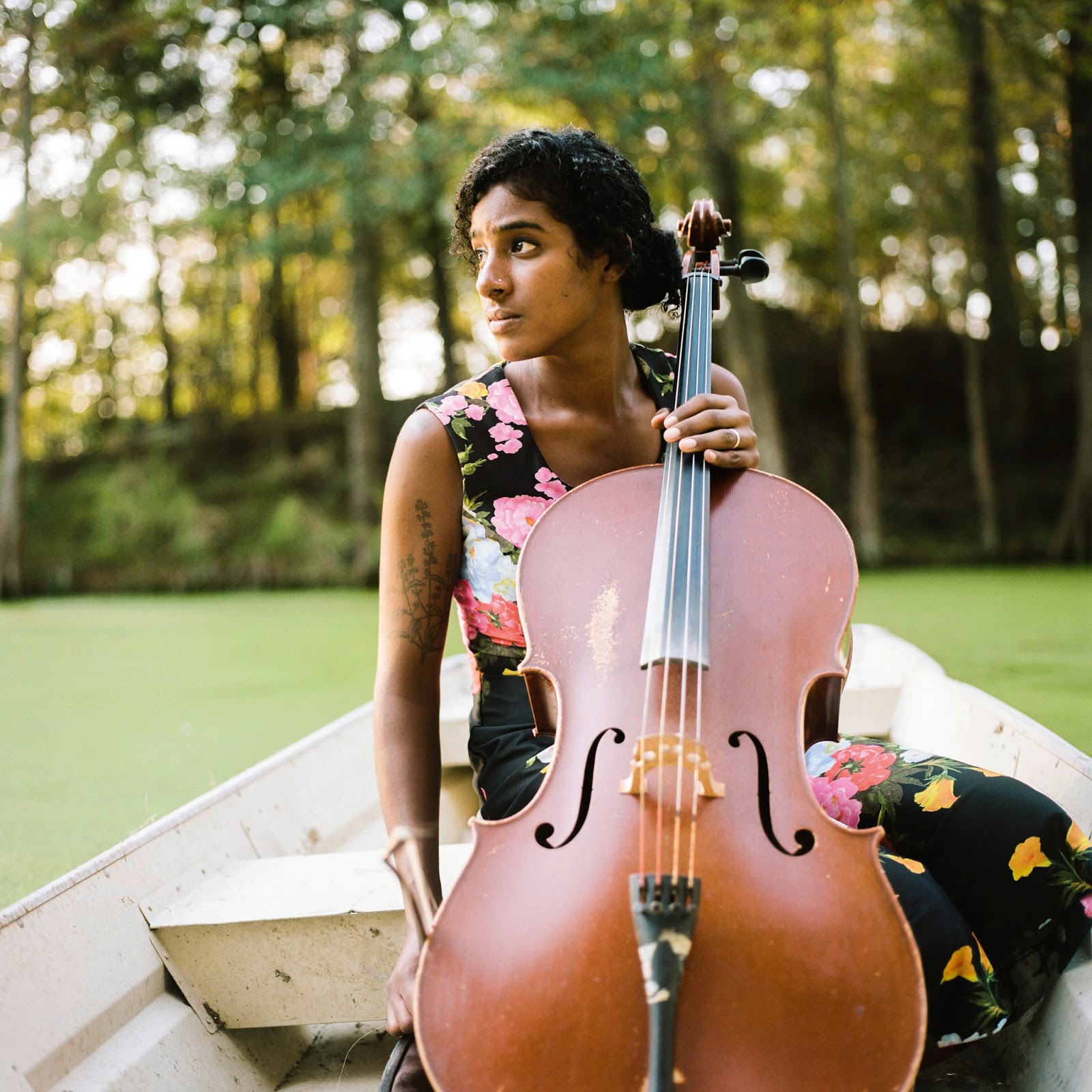
Interview with Leyla McCalla

(c) Sarrah Danziger

RG: How do you like being in France?
Leyla McCalla: I like it a lot. It's very different culturally than a lot of other places I get to travel to. I feel very well taken care of here. The social and political climate is a little bit intimidating here, globally too these days; it's a little bit heavy. But otherwise I like being here.

RG: There are a couple of French songs on the record. How close do you feel to French culture?
Leyla: I feel closer to the French language than I do to the French culture. Through colonization French has spread through parts of Africa, the West Indies and parts of the United States. And other places as well but those are the places where I’ve been and to where I feel connected. There is something about French that is really captivating, just sonically. To have grown up around a lot of people speaking Creole and to sort of connect with what the French language is and to what the Creole language is and why. It's very interesting to me as well.

RG: You were raised in the United States of Haïtian heritage. Listening to the record I feel as though you're constantly searching for your inner self. Was it hard to find a place to belong?
Leyla: In some ways yes. But in a lot of ways and in the way I live my life I've been following my intuition and my gut feeling that have kind of led me down a very unorthodox path. And I realize that my sense of home may not be because I am always on the go and I'm always searching and that's a part of being an artist and a touring musician. And now to be doing it with my family, I think it just changes my sense of what home is. Rather than being difficult to find a place to call home it was difficult to establish exactly what that meant to me.

RG: What is your definition of home?
Leyla: That is the hardest question on the interview (smile). I guess home is where you feel comfortable. Living the way I have been living and now raising a daughter and having my family on the road with me means that in my sense home is where I am. It's something I'm learning to establish wherever I happen to be. Not necessarily in one place. Because as soon as I start to get too comfortable in one place, it starts to get boring. But I think that home in general is a place where you can be yourself. 

RG: How did it feel when you went to New Orleans the very first time?
Leyla: I felt like it was a big tourist trap. I was very disenchanted, very disconnected. The second time I went I was committed to staying for a month. I was playing in the streets and I met these women in New York who invited me to play in New Orleans with them. I was with my bicycle and my cello and I felt the scent of freedom and magic. I fell in love with the city. I went back one more time and that is when I decided - I'm gonna move here. I wanna be in New Orleans, there is something there that is really calling me. A part of that was the music. It was such a contrast from how I had been living in New York. To be self-sustaining as a musician had been one of my goals for a long time. I felt like it was actually possible in New Orleans. In New York it was like a battle. I felt like I had to do a lot of other jobs in order to continue to afford to play music. And that felt very unbalanced to me. I've had a lot of different feelings about the city especially since it changed so much since I moved there in 2010. Gentrification.

(c) Sarrah Danziger

RG: What comparison would you draw between New Orleans and your Haïtian heritage?
Leyla: Haïti and the Haïtian revolution had a big influence on New Orleans culture and also political power in the West Indies, the United States and Europe. That is why I do my work to try to understand why that goes unrecognized. New Orleans has inherited a lot of things in terms of the language and the food: the spices, the rice, the cooking techniques. I'm sure Haïtian music had a big influence on the creation of jazz. The movement of the banjo from the West Indies to United States is an example. We like to say New Orleans is the birthplace of jazz but we don't ask ourselves, what is jazz? Where did that come from and what does it mean?. I think we like to think about history in a tunnel vision kind of way. When really there are a lot of different factors that come together in order to create change, to create culture. I feel New Orleans is a big example of the effect Haïti had on global history.

RG: How did you fit into the local scene?
Leyla: In some ways I fit in very well and in some ways I didn’t. I was a classical cellist and I was making a living playing classical music on the streets when I first lived there. I wasn't totally in the jazz scene. I fit in because there are so many people passionate about music and in New Orleans, music is a part of every gathering, every party, every show. Everything. There is always music around. I think that is something I wanted my whole life.

RG: There are a few traditional songs on the album. Are roots important to you?
Leyla: Yes.

RG: I think of it as some form of soul searching…
Leyla: It's a little bit of both. It's a little bit about looking back and kind of understanding heritage and roots, history and the origin of things. And in another way it's very much trying to understand my place and my role in it all.

RG: The album title « A day for the hunter a day for the prey » is coming from an Haitian proverb...
Leyla: It means a lot of different things to me. In one way you can hear it as every dog has it's day. In another way it's a day for the oppressor and a day for the oppressed. That felt more in line with what we're seeing in the world today and a lot of things happening in history. That title came from a book that I've read about music and power in politics in Haïti throughout the twentieth century. The book is about the coup d'état and troubles in Haïti where reflected in music and how music was used as a tool for a political party’s propoganda. On top of that there are issues about immigration, refugees, prisoners, people fleeing violence or persecution. That title came from all the research I did about Louisiana, Haïti, the United States and France and the intersection between all those places. The title became the umbrella for this album. All things fit with this title. It made sense with that feeling of helplessness or hopelessness. There is a lot of dichotomy in that title. I found it very interesting.

RG: This all seems very heavy but on the other hand the music itself is uplifting…
Leyla : Music is a such a great tool to be uplifted by. Spiritually. That's what I am doing with my music and hopefully that's what people are feeling while listening to it.

RG: In my opinion, there is a sort of timelessness quality to this album. How do you bring a fresh look to the traditional songs?
Leyla: I have fresh eyes (laughs)! Some of the traditional songs were written sometimes decades before I was even born. I was a teenager in the nineties and I graduated from College almost ten years ago now. I'm pretty young compared to a lot of these songs. And the world and my experience is very different than the world that shaped those songs. When you put those things together it's inevitable that something different and new is going to happen. Also I play the cello so everything is designed with my « cello mind ». My arrangements are designed with that in mind all the time too. I don't know how I do it. I am amazed (laughs).

(c) Sarrah Danziger

RG: That is where the magic lies…
Leyla (laughs): I really care about the music and how it's presented in the way that people can receive it. What is the best way to present this song? That is really what I am thinking about the whole time.

RG: We're going through some dark times right now and the world is a pretty violent place. Do you think music can bring healing in some way?
Leyla: I think music has an important role, certainly, in society right now. And there is definitely a lot of healing to do. I'm not sure about curing though, because even the music industry is completely sick you know (laughs). To me, having business be around music sounds like a spiritual paradox. That is not what my music is about but I need to eat and pay for my mortgage. I am pretty sure that is not what your question is about but I kind of feel that there is this capitalism underneath everything and then you have to create more and do more. It's always more, more, more and there is nothing that is ever enough - especially in American culture. Maybe it's different in France, or maybe not. I see the same things walking down the boulevard, it's all big brand names and everything is on sale. We've had to get rid of our stock in order to get more stuff. How do you create healing in a society that is so intend on consumption. I think that what I am interested in is creating something that is consumable as an emotional and spiritual tool. Maybe my label and people around me are like: « You've got to become a star and do this and that so we can make a lot of money ». I think that is clearly not what it's all about. So there is a bit of a conflict there, for a musician. Even for me. It's not like I'm in big business like Madonna or something. I do wonder about it. I guess we all have choices and we can make good choices about how we produce and release our music. And things we talk about in our songs and that is what I am focused on. The positive choices I can make. Because it all feels very much like the world is waiting to swallow you whole and take everything they want from you and squeeze all the good out. Leave you mentally, physically and spiritually exhausted. And I think this is now the risk for a musician. How to regenerate oneself without breaking down.

RG: And you need that in order to create…
Leyla: Exactly. You have to create that for yourself in order to share it. You can't just only be relying on what people want you to do. It has to come from inside at some level. It will be interesting to see what will happen in the world. It is a really sad, sad moment in history. We were supposed to play the Nice jazz festival that was our first date on this tour. That was that morning right after the big tragedy in Nice. Some people were worried about us and showed some concern. What can I say about the people that were there? Clearly we need to be talking about these things more and this is why I do the music that I do. I believe that things can be better. But it takes more than writing a few songs. You can change people's hearts. We need our politicians, and people who are representing us and making decisions to be interested in inspiring people and changing their hearts. It can't be just musicians alone.
Interview 22nd July 2016.
Many thanks to Angela Randall !!!!

dimanche 28 août 2016

Interview with Bill Pritchard


This is your second record after a long break away from music and i think something has changed in your music in-between…
Bill Pritchard : I think that basically i came back to what i like to do which is guitar based pop using real instruments that i like and that evokes memories. We used real piano, horns and getting away from anything synthsized or electronic. It's very important.

Was that an input from your producer Tim Bradshaw on your music ?
BP : I've known Tim for a very long time. I needed somebody to translate my musical ideas into music. I would write the songs, get the bare bones of the songs. The skeleton. And he would dress the whole thing with skin. I suggest thing. For « Saturn & Co » i told him i wanted to sound mid-sixties B-Side Brigitte Bardot. That sort of thing. And then he goes, i understand that, let's do it ! I can do it.

Like « A trip to the coast », the new album is released on the Tapete Records label which happens to have an impressive roster of 80s songwriters. Lloyd Cole, Robert Forster...
BP : Yes, a big collection of them (smile).

How did you got in touch with that label ?
BP : I played a gig in France, and Vincent Lemarchand, a bass player in the band with me, asked me if i've got any stuff recorded. He has all my old albums. He listened to some demos made with Tim and some friends and he told me you've got to have this released. So i thought about it. A german fan suggested Tapete Records so i got in touch with them. The first label i've approached and they said yes. That is very rare (smile). Fantastic.

Funny thing is you often sings about France, songs like « Paname », « Mont Saint Michel », but you don't sing in French much…
BP : « Mont Saint Michel », i was there with my family. I was suddenly going through a bleak period in my life. That happens sometimes in life, you know. So i was there and it felt fantastic. Suddenly it all made sense to me. That's why the song is there. Interestingly i did a tour in Germany recently and i played « Rien de toi », a song from « Parce que » wrote by Daniel Darc. I've been singing that in french really enjoying it and i got good reactions. In Germany ! It's really strange. I did « Tout Seul » on « A trip to the coast ». The origin is a song by an American band from the 60s The Fugs. « Morning morning ». A french Canadian Richard Drouet wrote a french version, in the early sevneties and he brought this beautiful lyrics to it. I loved it so we did our version of it.


« Vampire in New York » has a very surprising jazz angle, almost New Orleans…
BP : I loved New Orleans jazz, Dr John, i love all that stuff. I've played with him once ! I never had the opportunity to do it. I wrote the song on the piano. We got some french people to do the trumpets, to get that New Orleans feel.

Do you like to fool around in the studio while recording ?
BP : I like to experiment especially with harmonies. I love the idea of being spontaneous. And also lyrics. I write lyrics down but i would change lyrical sentences depending on how it sounds. I like to play around changing an adjective or a verb.

Do you often shop in the « Deja vu boutique » ?
BP (laughs) : I'll tell you a secret. The « Deja vu boutique » is actually an hair dresser in Newcastle. I was driving and i saw the title « Deja Vu Boutique » on the left i thought what a brilliant thing ! So I used it. I'll send you a picture of the Deja Vu boutique. I must take a picture of that. In the middle of the midlands. What was the odd of that !

And what lies in the « 50 A Holy Street » ?
BP : 50A holy street is a place from Erfuhrt, Germany. I wrote it there i was there with a friend.

Some songs like « Victorious » are ambitious with a very big sound and it's quite opposed to « A trip to the coast » that was more intimate…
BP : We wanted to develop our sound. And we had more of an idea of what the overall sound was going to be because we knew we will released it. « A trip to the coast » was written and recorded over a long period of time without an idea of an end thing of releasing it. This time it was very specific and that was better for working together. We had a very good idea of what we wanted. For example we got a live drummer, we got horns in, we used different guitars and strings. We had an idea of what we wanted, that was the reason.

One of my favourite on the album is « Lily ann », i thought the song has some sort of a 60s Gainsbourg quality…
BP : Oh wow, thank you very much ! That is a really nice thing to say.


Actually thinking about it, it's a little like the Brigitte Bardot thing we talked earlier…
BP : Yes definetely. It has an very specific atmosphere like a Parisian club in a certain period when certain people used to hang around. You could just imagine Dani in her heyday. All the 60s style, that sort of vibe.

The last song, « The lamplighter » ends the album on an harder note. It reminds me the song « In june » for the previous album.
BP : It is strange because i had an repetitive piano beat. It was two songs put together. The second one worked with the first one. And we build it up, build it up and it felt like an natural conclusion to an album. I always think of albums. 12 songs 6 songs side one, 6 songs side two. I always think vinyl in my head. That was the natural finisher it had to be powerful.

Did you had an specific idea on how to sequence the songs ?
BP : I spent a lot of time sequencing. An album is a whole, two sides. Not as much as Carole King did with « Tapestry », she spent months. We spent a couple of nights over it.

How does it feels being back in Paris ?
BP : Absolutely fantastic. I sent an instagram on my way in saying : Brilliant Paris, why did i stayed away for so long ? It has an nice feel to it. I was heartbroken after what happened in Le Bataclan (sad). I had history there, i've played there years ago. I knew people who know people who were affected by what happened. I just thaught why ? I was just sad.

And how would you discribe your bound with France ?
BP : I think it's still there. I can't grow out of it !


mardi 26 mai 2015

Interview with Teddie Dahlin

The Sex Pistols in Trondheim, 1977

Back in 1977, Teddie Dahlin was a young teen living in the quiet town of Trondheim, Norway. On one summer day, The Sex Pistols, one of the hottest punk band of the era, are coming to town for a gig. Young Teddie got a job as a translator for the band before falling for bassist Sid Vicious. Almost 40 years later, Teddie finally told the story with fond and tender words in a fascinating book called A Vicious love story.

Teddie back in the days (1977)
Can you explain to us, how and why you wrote the book? And Why write a book now after so long? 

Teddie Dahlin : I never planned to write a book. I didn’t think anyone would be interested. In 2010 a Norwegian author, Trygve Mathiesen, contacted me about a book he was writing; Sex Pistols Exiled to Norway. It was a catalogue of the people who had attended the concerts back then and their place in society−‘I Swear I was There’, sort of thing, and he had been told I was involved. I wasn’t interested to begin with, but the man was nice and I felt he was genuine, so I decided to help him out a little. He’s a sociologist and his book was the second in a series about important music events in Norway. 

I was shy about revealing details about my private life to the world so I kept my information brief. Trygve was more interested in where we (the band as a whole) went, what we ate, what they talked about etc. I ended up writing a huge chunk of his book.

The book released March 11th 2011 and I couldn’t believe the interest. The press kept ringing asking for interviews. I was getting calls from the UK and the US and when I refused to talk to them, they called my family, who still lived in England and Tore Lande (the promoter) who was in Malta at the time. It was crazy! When I wouldn’t talk to them – other people did. Articles started to turn up in the Norwegian press about Trygve’s book and in the UK and on blogs all over the world. It was scary. One place said ‘Teddie IS the book’ – indicating they found my details more interesting than the cold hard facts and charts of the social anthropology the book was meant to be about. Certain people wrote about details I’d left out of the book and there seemed to be speculation, which turned into lies. Tore Lande, who is an old friend from since I was 14 years old, phoned me from Malta and said ‘You have to write your own book. Tell them how it was. Set the record straight.” So I did. 

Was the book hard to write on an emotional stand point?

Teddie : Absolutely. It is probably one of the hardest things I’ve done. I’m sure everyone remembers their first love. When that person dies it’s just so much harder to handle. Sid died 19 months after I’d met him. I was 18 and had put our friendship away in my heart as a lovely memory. I always believed I would see him again, I just needed to grow up a little first. When he died it knocked me over. I couldn’t handle it. So instead of grieving I put it away in a little place at the back of my mind. I didn’t want to think about it or him and I avidly avoided anything about it after that.

The first chapters were easy to write, and it wasn’t until I got towards the end that it hit me full on emotionally again. Suddenly I had to grieve. Just because 35 years had passed didn’t make it any easier.

Were you afraid of revealing too much intimate details ?

Teddie : Does this mean sex? When writing I kept asking myself whether Sid would be okay about me telling people this and that. However when it comes to the intimate details I knew Sid wouldn't give a toss about it. He couldn't care less who knew what, but here I care. It wasn't just Sid's intimate life, it was mine too. So I decided to close the bedroom door on that in the same way I would never have sex in public. It is nobody's business and although I'm sure the book would be more interesting to certain people if I had gone into detail, the book isn't about that.

After gig party in Trondheim, 1977
Did you stay in touch with the remaining members of the Sex Pistols?

Teddie : No. Sid kept sending me messages with mutual friends up until Christmas 1977, but I didn’t meet them again. Malcolm McLaren had organised a new Scandinavian tour for straight after the US tour of January 1978. Sid asked me to meet him in Stockholm. I was excited that he kept in touch and that I was obviously in his memories and his heart. Everyone knows what happened on the US tour – the band split and the Scandinavian tour was cancelled.

When working on the first book for Trygve, I came into contact with the roadie from the tour. Roadent was the original roadie for The Clash and then The Sex Pistols before he went off to become a film star in Germany for a while. We hadn’t talked for over 30 years and it was great to meet up again. We are still in contact and get together when I’m in London.

When writing a Vicious Love Story, I was worried about how I would end the book. I planned to leave it with the van driving off, but was contacted by Eileen Polk, who was in New York at the time of Sid’s death. She’s a photographer and was DeeDee Ramone's and Arthur ‘Killer’ Kane’s girlfriend back then. She told me a lot of things I didn’t know about what really happened and I decided to contact other people who were there. This book was going to be a testimony from people who were there, not a speculation into what happened, which so many others have done before. I met with Peter Gravelle in London. He was the person who got the last heroin for Sid which he overdosed on. The last chapters in the book are told by the people who were there and who are my dearest friends.

After gig party in Trondheim, 1977

This is amazing how detailed the story is. You've spent only few days with Sid but it really looks like a long time relationship.

Teddie : Absolutely. Let me explain about why it’s so detailed:

When I moved to Norway from England in 1975, I spent the first year working hard on studies and perfecting my Norwegian language skills. In 1976 I went back to the UK for a holiday and I found myself struggling with my English. I was mixing English and Norwegian. That’s when I decided to write a diary in English to make sure I kept both languages fluent. You can imagine how I felt: 16 years old and in love with this amazing guy. Everything, all the feelings and every detail went into that diary.

Sid and I just ‘clicked’. It was instant and the trust was there immediately. We talked and talked and talked. It was like we both sensed our time together would be brief and we had to cram as much into it as possible. I’ve never experienced anything like that before. Looking back I expected him to be much more guarded about details of his life, but he wasn’t. Still now Sid can trust me. When I wrote the book I had an urgent sense of doing the right thing. People speak of him as an idiot and a junkie – that’s not the guy I met. I think the world needs to see a different side to the caricature of popular myth. 


In the end, do you wish you would have stepped in the van with the band?

Teddie : Back then initially I regretted not going with him. Of course, I was in love and wanted to spend more time with him. Two girls from the Bromley Contingent, Tracey O’Keefe and Debbie Juvenile were there with me and Debbie was mad as a hatter that I wouldn’t leave Norway for Sid. She was livid. She sat with me on the steps outside the hotel as I penned a letter to Sid, she would take with her back to London. I was adamant that although I didn’t go to Sweden, I would come to London.

But with hindsight I think I did the right thing. I think Sid would have ended up hurting me if I went. Sid didn’t do any drugs around me except once. I threatened to leave if he did any and he swore he wouldn’t. I was with him all the time and he kept his promise. But I don’t know how long I would have had that power over him. I knew deep down the life he had was not the one he wanted. But just because the circus has left town doesn’t mean the monkey wasn’t still on his back. 

There is a lot to be said for hindsight, but back then there was so much I couldn’t see – things I didn’t know. As the years have passed I have been contacted by people who have things to tell me and it really is devastating. You see, I was unsure of Sid’s feelings. He was the big Punk Rock Poster Boy. I was just a young girl. I knew what I saw in his eyes when he was with me, but when he left I started to question the reality of it all. Was I just one in a thousand other ladies Sid met on tour? It was this distrust and disbelief, together with the fact that my mother confiscated my passport, that led me to cancelling my plans on going to London – even though I got messages from Sid urging me to come. Now, whilst writing my book I suddenly learned that Sid had kept his promises to me for several months. 

Sid and the band went to Stockholm for a concert on a Saturday night. A Swedish photographer who covered the gig said Sid was quiet. He played the concert and left and went to bed at the hotel. This was Mr Punk himself out on a Saturday night! I’m hoping he didn’t feel like partying because he was sad about us. I will never know.

I’d asked Sid to keep away from Nancy. He promised. He said it was over. Actually it never was more than an on off thing when I met him, and it was definitely OFF at the time. He was angry with her disloyalty. He didn’t care if she slept around. It didn’t mean anything at the time and he promised to keep away. I was in Norway and was told that he wasn’t seeing her. After Christmas and the US Tour he was with her and I simply assumed he had been all the time. Now I learned that the driver back in the autumn of 1977, Barbara Harwood, told Jon Savage in his book England’s Dreaming volume 2 that Sid had asked her to keep Nancy away from him. She had started turning up at gigs and he didn’t want her there and he didn’t want anything to do with her. She also said Sid begged her to help him get clean. One night he got into a fight and had to go to the hospital and Nancy was there. Barbara wrote that she regretted not listening to Sid, but allowed Nancy to come with them to the hospital and I’m guessing that’s when she got close to him again…. It’s hard to hear these things so many years later. I get so full of remorse. Could I have made a difference to his life if I’d just followed my heart?

Do you still listen to the Sex Pistols?

Teddie : No, I didn’t listen to their music back then and I don’t now. I was never a punk or a fan of the band or a fan of anyone really. I was there to do a job as translator. 

Teddie now.

How's your life now?

Teddie : It has changed a lot since 2011. Drastically! I have written 5 books. Two non-fiction and three crime/fiction. I bought a publishing company in the UK back in 2012, New Haven Publishing Ltd, and it is growing so fast it’s fabulous. I have 12 authors who have several titles released with New Haven. We have branched out to foreign language books and the French edition of Vicious was first. It is also available in Russian. Writing is my passion and I dabble contrarily as a freelance music journalist mostly for UK magazines but also lately for Punk Globe in Los Angeles. The journalism came from being interviewed so many times. Then one magazine asked me to get an interview with a certain famous friend of mine and when he agreed they asked me to do it. So that’s basically how that started. 

I still live most of the time in Oslo, Norway, but since my company is in the UK, I end up spending time there too. I have become a bit of a nomad. :)

A Vicious Love Story by Teddie Dahlin
New Haven Publishing Ltd


vendredi 8 mai 2015

Interview with Lady Linn (english edition)


Belgium soul singer is back on a brand new beat...

The first song on the new album is called « Regrets ». It's a strange way to start a new record...
Lady Linn (laughs) : Well, for me the title is not the most important thing. It's more about the atmosphere of the song. And it's a good song to start with. It starts very slow and easy. I thought it was a good beginning.

On that record you switched from piano writing to guitar writing...
L.L : Sometimes it's good to discover a new instrument and make songs with it. You don't know it so well and then you do different things. And i thought it was time for something different. A new approach. It's fresh and surprising.

If we go back to « No goodbye at all », when the album was released, did you have the feeling that you couldn't do a better record on that specific kind of music, sixties jazz/soul ?
L.L : Actually, it was my first album to be released in France but it was the second one in Belgium. It was my second album in that style. It grew naturally in me, i wanted to do something else. I wanted to be free. Not thinking about the band, the magnificent seven. I wrote the first two records with the band in mind, the full horn section, the piano. Now i just want to write and then we'll see what happens. I wanted to do something else.

You used to a kind of 60s pop singer...
L.L : I still am.

And this is a new sound for you. Do you feel the need to move forward ?
L.L : I wouldn't say forward because i still like my two previous cds. And we still play the old songs during the show. But you know there was a part of me that was never there in my own music. I sang house for ten years and you didn't hear it in my music. And now in the last album i feel it's more me. A combination of things. Now i combine more all the things i am doing in one. The last album was more about the concept of the band. Now it's just me. Renaud Letang has made the songs very different. My songs were very acoustic when i went to Renaud. He chose to do something very poppy with it. I was ok. I trust him.

Is it like a new start, exciting ?
L.L : Yeah, it is for me. I really like it. It gives me new energy. Also live it's a different band with a lot of new musicians. The horns are still there and the sings backing vocals as well. We worked hard. Everybody like the new band. We enjoy it.

On the other hand there are songs like « Back », « Remember », « Drive » would could easily been on previous albums...
L.L : That is what i mean. I combine a lot of styles. I listen to soul music but also pop, rock, jazz, country, reggae, brazilian music. But in the end, it's still me who writes the songs. Previous albums, produced in a different way could have been like this. The songs are the songs.

Do you have like a core, a musical identity and then you evolve around it ?
L.L : Yeah that's it. You write songs but what they are going to sound like could be very different.

Another new thing is the 80s angle on « Never ». It's a very poppy song, new wave song...
L.L : Yeah it's true. This is a song i wrote about a feeling i have and i think it's very universal. From the moment you let somebody go and then sometimes they start to love you. It's typical. It's something i struggle a lot with in previous relationships. Not anymore i'm happy (laughs) ! It happened a lot to me. I was in a relationship that wasn't working out. So i left and then he was coming back. At that moment, when i wrote it, it wasn't going on but it is still in me. You still want the person but you know it's not good for you...

A few words about the « sassy » side of you ?
L.L (laughs) : Sassiness to me is like, i'm confident, i know i can be strong. You see a lot of people that are very sassy, confident and you're a little bit jealous about that. You also admire them. You think they have no problems, actually that's not true. I thought it was a funny topic. The feeling of jealousy is childish actually. It's not helping anybody. To me sassy is to be more confident.

This is the first time the band the magnificent seven is not involved in a recording...
L.L : Yes. That's because of the style. Also because the way of work is very different. The previous albums i wrote i only rehearse with the whole band. But now i wrote the songs and we made a demo with just one guitare player, Bruno. And then we went to met Renaud. He did a lot about the sound. Every musician involved came one by one to Paris for a couple of days. Renaud took the lead and worked with them. The arrangement is different. Also, we chose the name Lady Linn and her Magnificent Seven because it sounded like an old big band like Duke Ellington and his orchestra, Count Basie and his orchestra. It's the same vibe. It's a more produced record, not just about the band. They're playing but not as a group. I thought, it's too different, that is not the same anymore. Also it's not the same musicians anymore, the three horns are the only ones left. The name, Lady Linn and her magnificent seven, didn't fit the music anymore.This is too different from what it was.

You told us about Renaud Letang, who produced the album. Do you have a special working relationship with him ?
L.L : Yes. He's really great ! And i really love to come to Paris ! I really loved it ! I love to record here and work with Renaud. We did a tour in France, two years ago. The people are really warm. When we came to play, they were very enthousiastic from the first song already ! And we are not used to that. In Belgium, people are not so opened. In France you start to play and they start to dance already and you didn't do anything (laughs). It feels very natural. It's very nice. Even in the smaller clubs we played. They are very enthousiastic ! It's very fun for me to be out of Belgium.

Like a vacation ?
L.L : It feels very exciting. Yeah it feels like a vacation. A better vacation actually because we're doing something here (laughs) !


We talked about the guitar, yet there is a beautiful piano song « Feeling me » on the album. A few words about that one ?
L.L : This is one of the first songs i wrote for the album. Two years ago i was still teaching in a music school and i wrote the song there, in the classroom on a big piano. I have recorded the song with my phone on my voice mail because i had nothing else and i felt the urge to record. I forgot about the recording. The song had changed it was a pop song and it became an energy song. And then i said to Renaud : I don't feel this song maybe we should throw it away. And then by accident i listen to my voice mail. I am very bad with voice mail, i leave to many messages. So i listened and i heard « Feeling me » on the piano. It was higher in a different key. Wow that was much more beautiful (laughs) ! I said to Renaud, do you want to hear it, i think it's better than the first version. We put it like that. This is funny. Weird.

I think the first song recorded for the album was « High »...
L.L : Yes indeed. Renaud said « It remind me of the flashdance movie » ! What a feeling (she sings). He added some beats. I was surprised by the way he heard things differently. It was more of a soul song not disco. But he knew i like disco and i like singing dance. That's why.

I've read you liked Charles Bradley...
L.L : Yeah i was inspired by him. I was watching television and i saw a live concert. It really touched me. It's amazing how he lets himself go like a transe or something. He's actually high on music. Wow, really !

I saw him live a couple of times and i thought he was going to cry on stage...
L.L : Yeah and he does ! He really gets high. That's why i wrote the song. After watching this i had to cry because it was « WOW » ! It's unbelieveable ! Very emotional. I went straight to my piano in the living room and i start to write the song, it came out in ten minutes or something. Just because of him, he made a very big impression (laughs) !

Did you met him already ?
L.L : No, maybe i should. It doesn't matter actually. I'm glad he inspired me, he doesn't have to know me. It's not important.

And where do you want to go from there ?
L.L : Right now i'm writing for a movie in Belgium. I'm writing the whole music score for the movie. It's gonna be out in 2015. It's a new thing for me but i really like it. There is going to be instrumental but there is also songs. It's different from the « high » album. It's very empty. Sensitive. I can't really explain it. I'm also inspired by new people, the afrobeat scene.

http://www.ladylinn.be/web/
https://nl-nl.facebook.com/LadyLinn